What are the Design Elements of Earthquake Resistant Buildings

Knowing how to preserve our infrastructure from natural catastrophes should be entrenched in the Filipino building industry. The Philippines is no stranger to earthquakes, as it is part of the Pacific Ring of Fire, which has the most volatile seismic activity on the planet due to the numerous sites where tectonic plates collide.

One of the most catastrophic consequences of earthquakes is infrastructure breakdown, which damages not only the structure but also its contents. It also causes damage to the surrounding areas, especially if the building is substantial.

As a result, there is a significant amount of engineering that goes into protecting a building from seismic activity. In this section, we set out the fundamental characteristics that allow a building to withstand earthquakes.

Use of light, flexible materials

The selection of light and flexible materials is the first step in building an earthquake-resistant structure. The fact that these materials are ductile means that they can endure stress and distortion. Wood, steel, and even bamboo are examples of ductile materials. During a quake, these materials allow structures to bend and shift without breaking.

Reinforcement of structure

Buildings must practically prepare themselves to resist a quake. That is why architects and engineers ensure that concrete is reinforced with steel. A robust concrete column must be supported by a large number of steel bars aimed at keeping a column stable during seismic movement.

Typically, extra steel would be added to the top and bottom of columns to make them secure. Steel bars are also held in place by bending 135-degree loops rather than just aligning them. Insufficient steel reinforcing will result in a brittle column that will most likely collapse during a quake. 

Large columns can also help channel swinging motion in larger buildings. The shinbashira, a massive center pillar situated in the middle of tall structures, is another prominent ancient earthquake-proofing architecture from Japan that performs something similar. The shinbashira functions as a pendulum and the design have been used by large structures in Taiwan and New York.

Shear walls are another type of extra reinforcement construction that can channel the swaying motions caused by seismic activity down into the foundation to help absorb the energy.

Base isolation The basic component in earthquake-proofing structures is to absorb as much energy from side-to-side oscillations as possible, similar to a shock absorber. Another method is to lay down flexible foundations.

Large infrastructure designers may choose base isolation, which involves constructing infrastructure on flexible pads that can sway in response to seismic activity. These pads are commonly formed of ductile materials such as steel, rubber, and lead. When there is a quake, the base sways while the structure itself remains relatively static. As an additional precaution, these bases can be outfitted with seismic dampers that absorb the energy. 

Force dampers

Another method for making structures more adaptable is to use force dampers. These dampers absorb a building’s oscillations through friction, converting kinetic energy into heat and allowing it to dissolve. These dampers are often installed diagonally between columns and beams throughout infrastructure’s levels.

A tuned mass damper is another piece of technology that dampens earthquakes. These are simply ball pendulums situated in the center of the building so that when seismic activity occurs, the ball sways in the opposite direction of the quake, so canceling out force. Taiwan’s Taipei 101 tuned mass damper, the world’s largest and heaviest of its kind is a prime example of this.

Self-check the sturdiness of your home

In the Philippines, there has long been talked of “The Big One,” a huge earthquake with a magnitude of 7.2 that is supposed to hit Metro Manila. With a fault line stretching from Bulacan to Laguna, it has the potential to cause widespread devastation if buildings are not equipped to withstand it.

Assess the structural integrity of your home with this self-checklist, which includes elements such as the age and shape of your property, the thickness of its concrete, the grounding of your structure, and more. One of the fundamental goals of the building business is to keep communities safe from natural disasters.

Engineers and architects are continually creating new designs and technology to keep structures robust in the face of earthquakes. After all, it is buildings, not earthquakes, that can harm people.

Lightweight Concrete 101 Everything You Need To Know

lightweight aggregate concrete

Lightweight concrete is a concrete mixture that composes of ordinary aggregate mixed with a part of artificial lightweight aggregate, which forms as a result of expanded clay. Used for beams, pillars, floors, and even toppings, lightweight concrete is an innovative product that allows constructors to make ‘traditionally’ heavier structures lighter and more feasible to work with.

J:\Affiliate Marketing\GP Work\image\Lightweight Concrete 101.jpg

Lightweight concrete is a relatively strong structure, even with its lighter weight, allowing it to be a common choice for several construction projects. It’s highly durable and is growing to be a favorite of several construction workers with every passing day.

Types of lightweight aggregate concrete

There are several types of lightweight aggregate concrete, with each holding its fields of expertise. We’ve made a list of the most commonly used lightweight aggregate concrete types for your reference:

    1. Pumice: A natural lightweight stone, the pumice forms as a result of the sudden cooling of volcanic lava. As an aggregate concrete, pumice is commonly used for reinforced concrete roof slab and industrial roofs (mainly in Germany).

    2. Foamed Slag: Foamed slag was the first lightweight aggregate concrete that was produced in large quantities in the UK. It’s commonly used for Portland’s cement concrete and as a raw material for cement production.

    3. Expanded clay and shale: Essentially the most commonly spoken about lightweight concrete, expanded clay and shale holds a high level of strength for prestressed concrete. It can be used for thermal insulation, sound insulation, railways, walls, etc. The uses of expanded clay are excessive and not limited in any manner.

    4. Expanded Clay Aggregate is a company set in India that works to make a better and easier day for all of their customers. If you want to know more about the uses and applications of expanded clay, you can reach out to them today.

Lightweight concrete uses

There are several benefits of using lightweight concrete. However, it’s not always easy to know the benefits of a product from a distance. Lightweight aggregate concrete is used for a lot of structural applications, with its strength being on the same level as normal concrete. The uses of the concrete include:

  • As mentioned earlier, ‘traditionally’ built structures tend to be extremely heavy. Whether it be a pillar, a beam, or even a roof, there’s a lot of dead weight involved in a structure that’s been built by normal concrete. However, if you choose to use lightweight concrete in the structure’s build, you will be able to reduce the excess weight of your property, be it in foundations or reinforcements.
  • Since lightweight aggregate concrete is porous, it holds thermal properties, which can be extremely beneficial in the long run.
  • Lightweight concrete holds resistance against fire, which makes it a safe material to work with.
  • The elastic modulus of lightweight concrete is lower than that of normal concrete, however, this is balanced out due to the lighter weight of the concrete. Through a magnificent balance, lightweight aggregate concrete is growing to be one of the ideal materials in the world of construction.

Whether you’re about to work on a new construction project or are simply gathering knowledge about the right construction material for your project for when you’re back in the field and working, it never hurts to have added information about some of the finer materials available in the market. Expanded Clay Aggregate can help you find the materials you need depending on your need for the application. Make your job easier, invest in fine materials!

Choosing The Right Concrete Sealer for Your Project

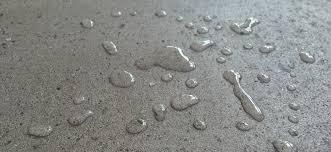
The best, least demanding, and most cost-savvy approach to ensure cement is by fixing or sealing it with an amazing concrete sealer. A concrete sealer is used for shielding the surfaces from water damage due to stains from dirt, oil, salts, frost/defrost cycles and other contaminants.

Things you need to remember before selecting a Concrete Sealer

Image result for what type of concrete sealer should i use?

With many sorts of concrete sealers and several brands available, it might be an overwhelming task to pick one to buy and apply for a project.

Before choosing a sealer, it is critical to comprehend the different purposes of a sealer. Irrespective of the type of concrete sealer you choose, you can always relish the following benefits:

1. Represses Mold 

The mould growth is inhibited when you seal the concrete. This helps to protect it and makes it look better.

2. Builds Durability 

If you need to guarantee that your concrete looks incredible & works appropriately, applying the sealer is an astute decision.

3. Expands Life

The longevity of concrete is enhanced by the sealer. The life span of a sealed concrete increases by almost 25-30 years. 

4. Offers Protection

The sealer will likewise bolt out dampness in the concrete, so freezing and defrosting won’t harm it. 

5. Improves Color

Topical and basic sealers can keep the colour of concrete flawless. It is because they shield the concrete from the components and keep it looking spotless and sharp for an extended timeframe.

Types of Concrete Sealers

To enable you to spec out better your next task, we’ve separated the upsides and downsides of the most widely recognized kinds of sealers:

Polyurethane Concrete Sealer

Polyurethane concrete sealer frames a defensive film that gives protection from synthetics & abrasion. It is available in both solvent & water-based solutions.

Benefits:

  • Double the thickness of an acrylic sealer
  • Non-yellowing
  • Available in a range of sheens
  • Highly durable finish

Polyurethane solid sealer is normally utilized on floors in high-traffic areas and to upgrade the excellence of concrete ledges.

Ideal For: Interior & exterior use

Penetrating Sealers

Penetrating sealers, (siliconates, silicates, siloxane and silanes) are used for sealing the pores of concrete below the surface.

Benefits:

  • Protects against climatic conditions
  • Protects against stains & de-icing chemicals 
  • Prevents thaw- freeze damage
  • Doesn’t change the appearance of the concrete
  • Prevents slipping in wet and cold conditions

Ideal For: Pool Decks and Driveways

Epoxy

Epoxy solid sealers are utilized for concrete ledges, high pedestrian activity zones, inside recolored concrete & concrete overlays.

Benefits:

  • Abrasion-resistant
  • Hard, long-lasting finish
  • Clear in pigment but can be coloured
  • Repel water
  • Come in mid-level sheen or high gloss

Ideal For: Indoor concrete

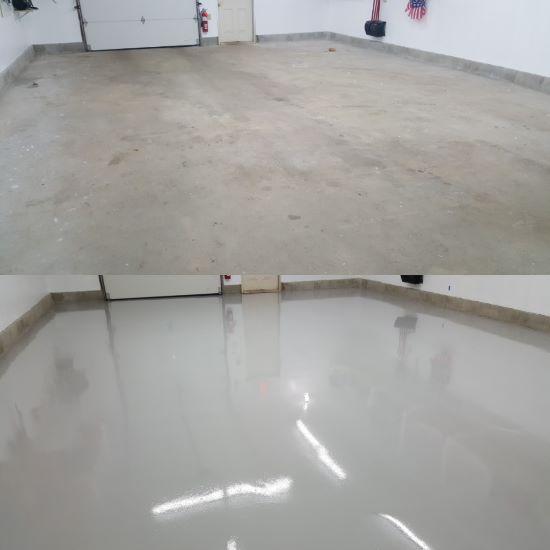
Epoxy sealer with urethane top-coat

Epoxy Sealer

Acrylic Concrete Sealer

Acrylic solid sealer minimizes expenses, can be utilized on both inside and outside surfaces and is easy to apply.

Benefits:

  • Non-yellowing & UV resistant 
  • Available in a range of sheen levels
  • Protects against chloride & water
  • Dries quickly
  • Protects the surface & enhances the colour of decorative interior floors

Ideal For: Pool decks and Driveways.

Water-based – 

  • Less shiny 
  • Water-based acrylics have lower odor & VOC 
  • Do not last for so long

Solvent-based – 

  • Glossy and colour-enhancing sheen 
  • Solvent-based acrylics have higher odour and VOC 
  • Greater longevity

AlfaPrime.ca is the pioneer in introducing concrete, ​products, tools and accessories in Toronto. Over the years AlfaPrime has become a benchmark of high quality in concrete products, renting concrete tools and safety equipments. 

We aim to provide our clients with a ‘single source’ connection to technology& products. Alfa prime is dedicated in our efforts to become a valuable partner by providing services & products. We are dedicated to offering unparalleled service by committing to being the best in the industry.